
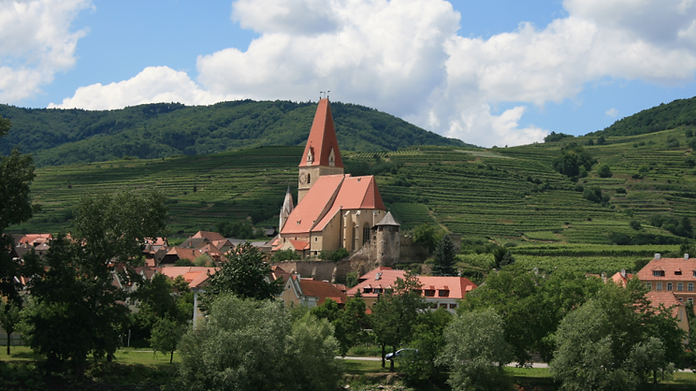
Picture a hillside covered with vines above the Danube, a village tucked beneath the terraces, and a glass of wine that adds deeper meaning to the view. For wine enthusiasts, a river cruise offers the opportunity to connect the landscapes passing by your window with the bottles on your table.
The most rewarding approach is to combine vineyard visits with relaxed tastings in port. Austria brings the Wachau region and Vienna; Germany and Hungary offer regional wines and opportunities to explore further afield. These eight stops and itinerary additions highlight what to taste and how to enjoy your time ashore.
Vienna and its wine tavern tradition
Terraced vineyards above Weißenkirchen reveal the landscape behind Wachau wines. Photo: jay8085 · CC BY 2.0.
Vienna offers the unique opportunity to spend part of the day exploring the capital city and another part discovering its vineyards. Begin with Wiener Gemischter Satz, the city's distinctive white wine made from multiple grape varieties grown together. It provides an especially fitting introduction to a place where wine is an integral part of everyday life.
Seek out a traditional Heuriger, a wine tavern, for a leisurely glass of wine and local cuisine. Grüner Veltliner and Riesling are also worth exploring. Let the host guide your choice, then ask how the wine reflects the characteristics of the vineyard it came from. That conversation can be as memorable as the tasting itself.
The Wachau Valley for vineyard views and white wines
For travelers who want their wine experience rooted in the landscape, the Wachau is a natural highlight. Around villages such as Dürnstein, Weißenkirchen, and Spitz, vineyard terraces invite you to slow down and look closely. Pair a village stroll or a marked vineyard walk with a tasting of Grüner Veltliner and Riesling.
Try the two varieties side by side and notice what changes in aroma, texture, and freshness. Rudi Pichler, based in Wösendorf in the Wachau, is one producer to know. Arrange estate visits directly and confirm availability before planning your day around a particular winery.
Melk for abbey history and a taste of the Wachau
Melk combines a celebrated abbey visit with an introduction to the surrounding wine landscape. Give the abbey time, then look for a Wachau tasting that fits the ship's schedule. A glass enjoyed after sightseeing can make a satisfying finish without turning the afternoon into a race between appointments.
If Schloss Gobelsburg is on your wish list, plan it as a separate excursion into the Kamptal. The estate offers cellar tours and tastings, but it should not be treated as a winery in Melk or the Wachau. Confirm transport and the full return time before booking.
Passau for a relaxed wine stop
Passau is a lovely place to combine an old town walk with a leisurely restaurant or wine bar stop. Ask which German or Austrian wines are being poured and choose something unfamiliar. You can learn plenty from a thoughtful glass without visiting the estate that produced it.
Keep expectations grounded: a wine on a local list does not necessarily come from vineyards near the port. Rudi Pichler, for example, belongs to Austria's Wachau. For a short call in Passau, staying in town may be the most enjoyable use of your time.
Regensburg and the Baierwein story
Regensburg adds a smaller scale wine story to the journey. Ask about Baierwein, the regional wine tradition associated with the Danube around Regensburg. It offers an interesting thread to follow alongside the city's historic streets and riverside scenery.
For a more profound look, explore the Baierwein Museum in Bach an der Donau as a possible outing beyond the city. Check current opening arrangements and transport first, and confirm separately whether any tasting is offered. A museum visit and a winery tasting are different experiences.
Nuremberg and a Franconian wine extension
Nuremberg is an itinerary addition reached through the Main–Danube Canal rather than a port on the Danube itself. If your cruise includes it, use the opportunity to explore Franconian wine. Silvaner is an excellent starting point, especially for travelers who enjoy discovering a region through its signature varieties.
For an estate experience, Hans Wirsching welcomes visitors in Iphofen. Its focus includes dry Silvaner and Riesling, and its tasting rooms offer a way to explore the range. Iphofen requires travel from Nuremberg, so consider it a planned excursion or an extension to your cruise.
Budapest for Hungarian wines by the glass
Budapest is a good place to let a guided tasting introduce you to Hungary's variety. Ask for a selection that contrasts dry whites, reds, and a sweet Tokaji. Egri Bikavér can introduce a red wine from Eger, while Tokaji leads to the country's celebrated dessert wines.
A glass of Tokaji Aszú offers inspiration for a Hungarian wine tasting. Photo: Charles Haynes · CC BY-SA 2.0.
Tokaj is a separate destination, so save an estate visit there for a carefully planned excursion or time before or after the cruise. Disznókő offers vineyard, winery, and cellar experiences by arrangement. If your port time is limited, a tasting in Budapest is the simpler way to explore the wines.
Kalocsa and an excursion toward Szekszárd
Kalocsa brings paprika culture into the journey, with an opportunity to look beyond town for wine. If the itinerary allows, consider an organized excursion toward Szekszárd, where Bodri produces wines including Kadarka and Kékfrankos. The winery is in Szekszárd, so transport needs to be part of the plan.
Kadarka is a particularly appealing discovery for curious red wine drinkers. Bodri describes its version as fruity and spicy, and suggests it with paprika dishes and stews. It is a useful invitation to taste the wine with food and see how the pairing changes your impression.
Plan your cruise around the experiences you love
Before choosing a sailing, compare the actual ports and excursion descriptions. Not every Danube cruise includes all these stops, and a scenic passage through wine country does not guarantee a winery visit. Look for enough time ashore to enjoy the experiences that matter most to you.
Book tastings ahead, check return transport against the ship's all aboard time, and leave room for a spontaneous glass with lunch. Keep a few notes or photograph bottle labels so you can find your favorites later. If you hope to bring wine home, check the cruise line's bottle policy and your luggage arrangements before buying.
Whether you prefer a vineyard walk, a convivial Viennese tavern, or a tasting that introduces you to Hungarian varieties, the Danube offers plenty to build a trip around. Choose a few experiences you will want to linger over, and give yourself time to enjoy them.
Which would you choose first: Wachau vineyards, a Vienna Heuriger, or a glass of Tokaji in Budapest?